Seven
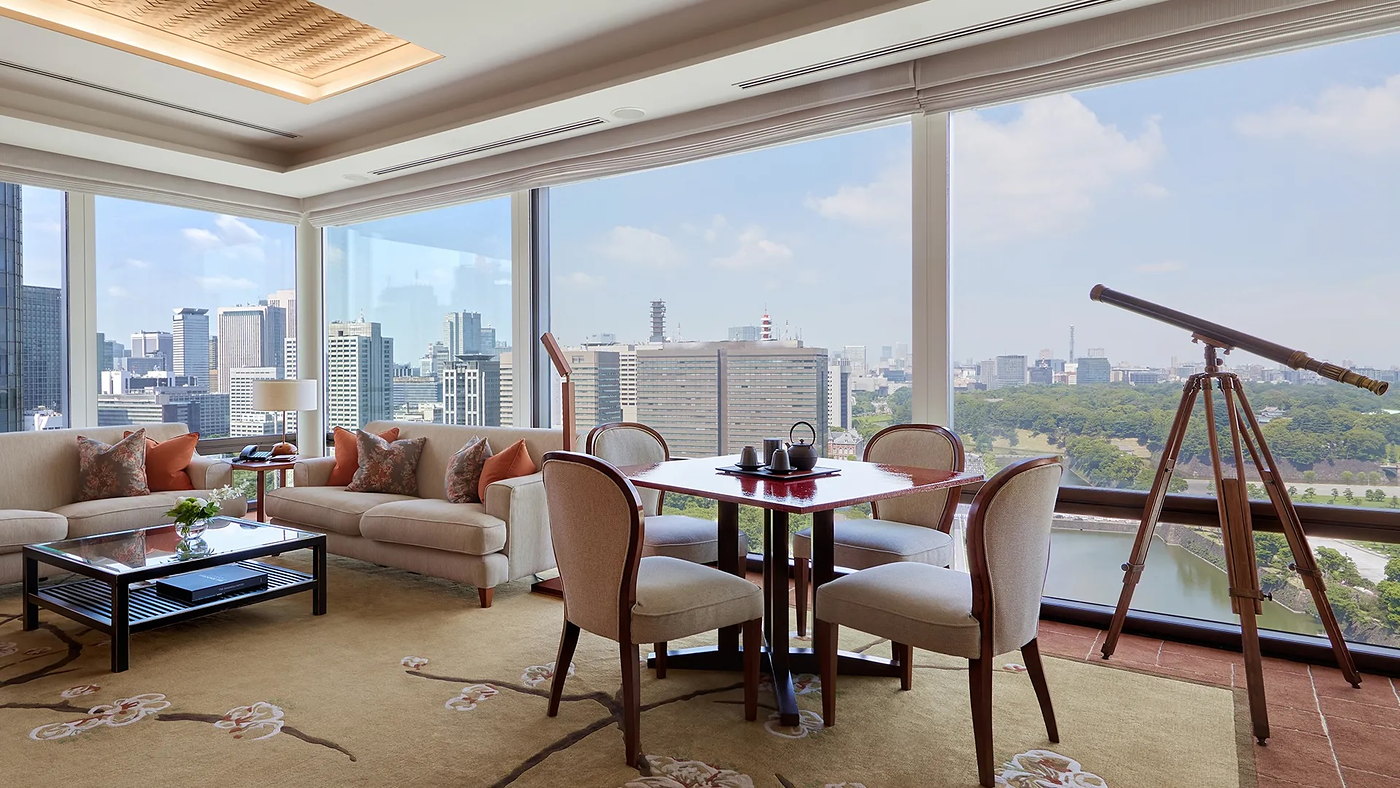
It was built to be read as a lantern. Kazukiyo Sato gave the tower a heavy stone base and a lit crown, and after dark, seen from the far side of the avenue, that is very nearly what it is: a single paper lantern stood on end at the corner of the Imperial Palace grounds.
The position is the argument. Twenty-four storeys, 314 rooms of which 47 are suites, opened in September 2007, and the windows on the palace side look across the moat to a walled forest in the middle of a city of fourteen million. Yukio Hashimoto did the interiors and worked in lacquer, washi and hammered metal, so the building reads as Japanese from the inside as well as from the street. Ginza begins four minutes away on foot.
Go up to Peter on the twenty-fourth floor before dinner rather than after, while the light is still going, and take the bar rather than a table. The spa occupies two entire floors, which no city hotel of this height can usually afford to give away, and the twenty-metre pool is glazed to the skyline along its whole length. Swim at seven in the morning, when the office towers are still lit and still empty.
Affiliation · Peninsula PenClub
Six
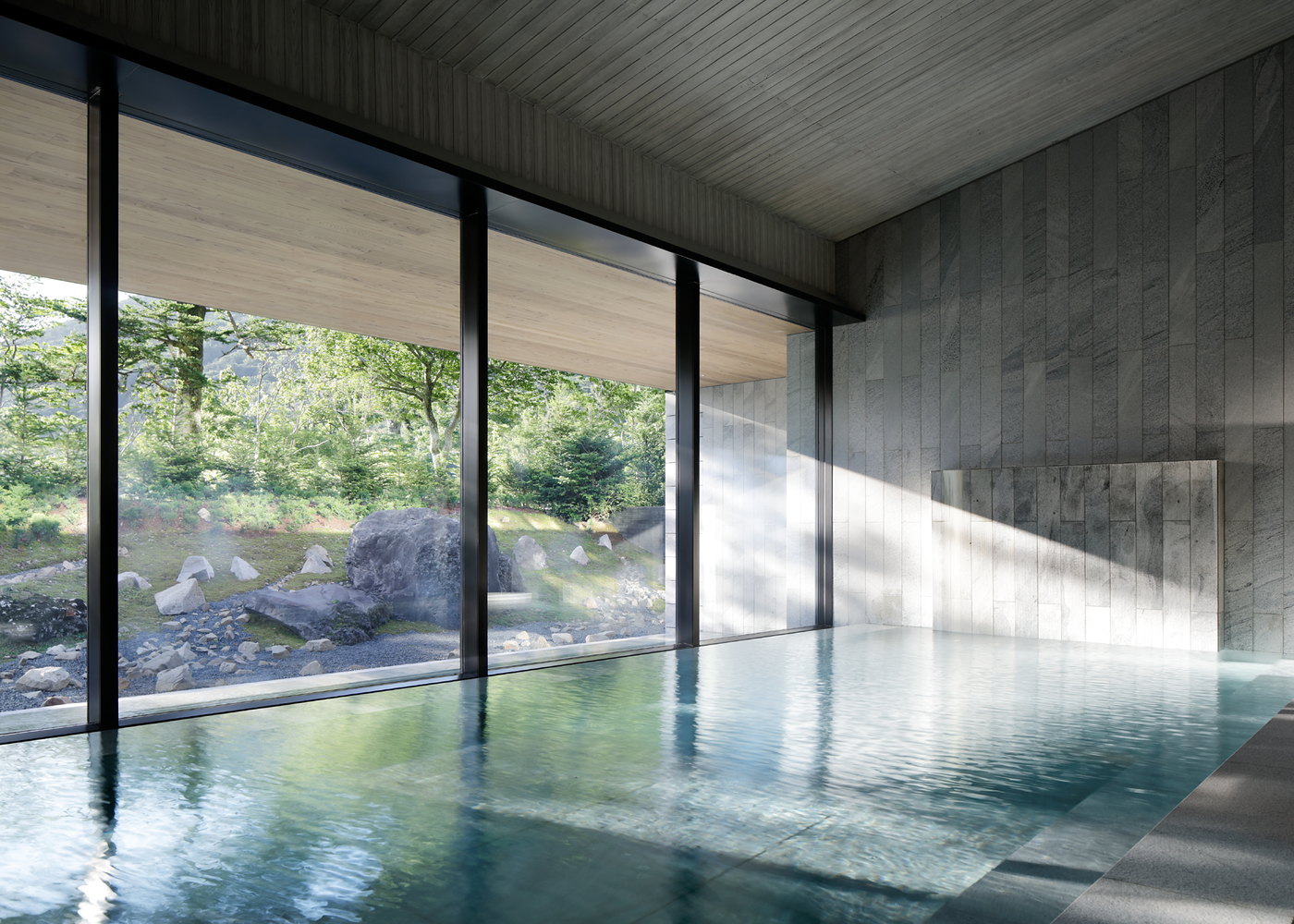
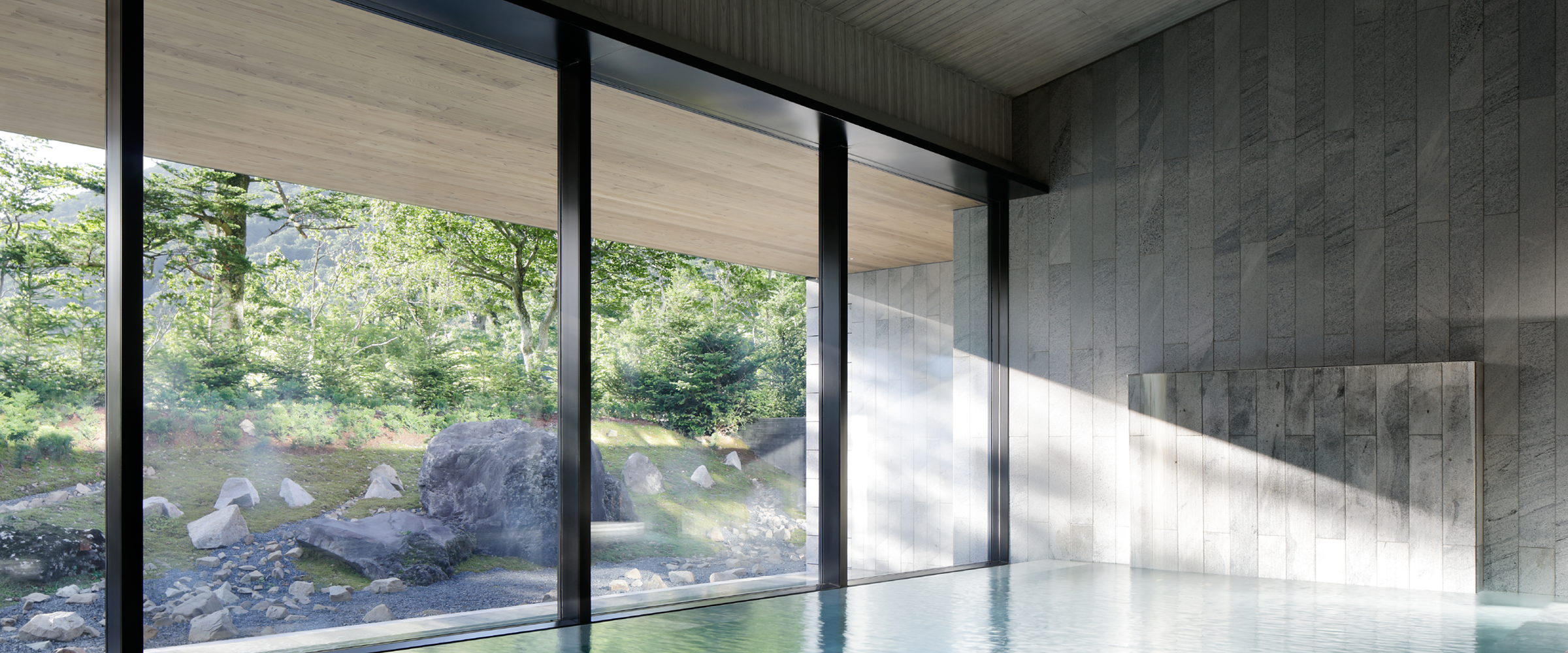
The water was found more than twelve hundred years ago, and it is piped rather than carried. That distinction matters more than it sounds. Nikko Yumoto Onsen lies about ten kilometres up the valley, and its sulphurous water arrives here still hot, which is why this became the first Ritz-Carlton anywhere in the world to put a real onsen behind its name.
There are ninety-four rooms, every one with a balcony and an engawa, the narrow timber veranda that in a Japanese house does the work of a threshold. It opened on 15 July 2020, two months later than intended, into a season with almost no guests. Nikken Sekkei set it low against the lake so that Mount Nantai, and not the hotel, is what you see first.
Bathe before dinner, outside, in winter if you can stand it. At dusk the staff perform a short meditation in the lobby, every night, and it is not laid on for cameras. Lakehouse is the room to eat in, with the terrace over the water. The pottery in the public rooms is Mashiko, made ninety minutes south, and on departure you are given an omamori, which is a better parting gift than most.
Affiliation · Marriott STARS
Five
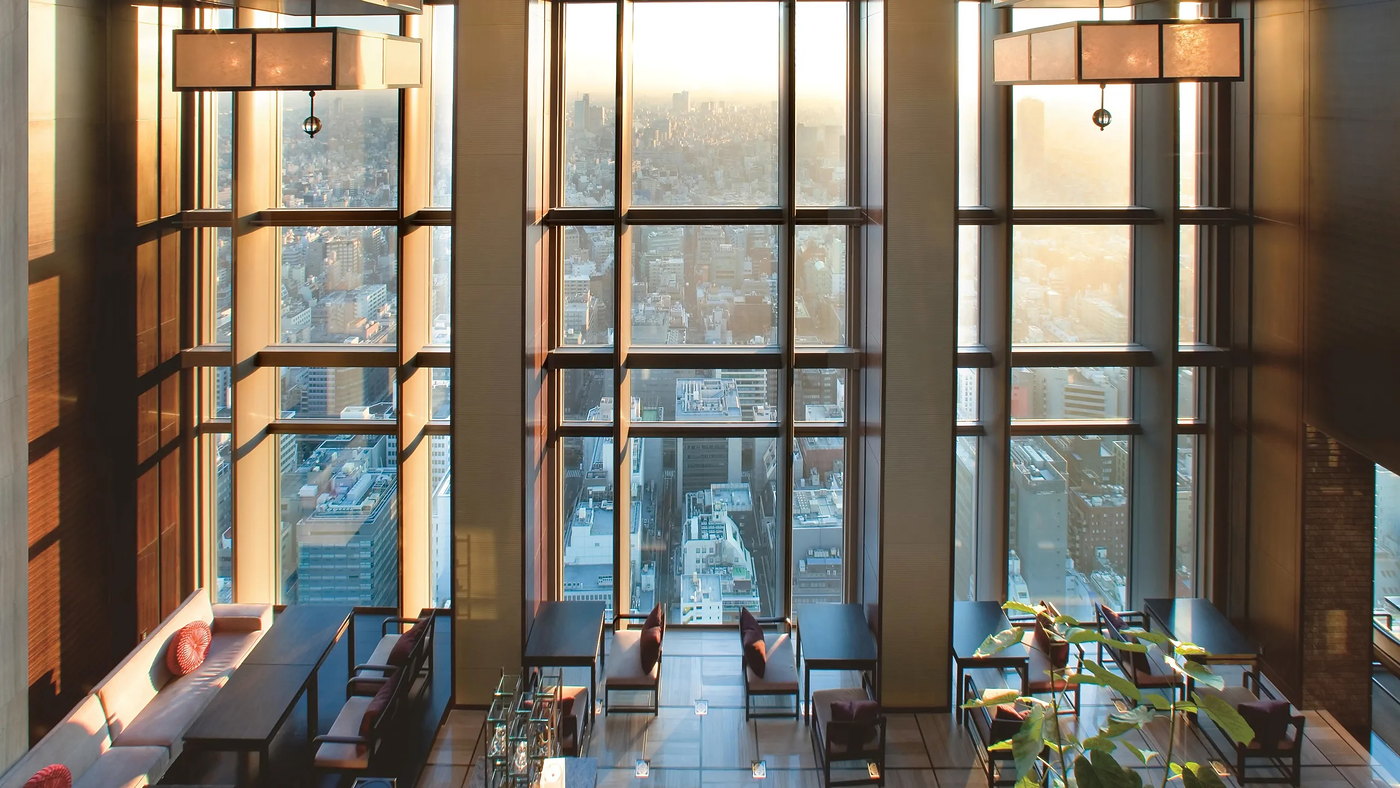
The hotel does not begin until the thirtieth floor. Everything beneath it belongs to other tenants, and the nine floors the Mandarin occupies sit directly on top of the Mitsui Main Building of 1929, a designated Important Cultural Property of Japan. You arrive at street level in a piece of prewar neoclassical Tokyo and you leave the lift a long way above it.
Cesar Pelli drew the tower. The hotel opened on 2 December 2005 with 179 rooms and suites and a governing idea its designers called woods and water: the building understood as one large tree, the guest floors as its branches. It sounds like a brochure until you notice that the materials really do change as you climb, and that every surface in the room was chosen to be touched.
The thing most guests miss is The Cellar on the thirty-seventh floor, a private dining room set inside a wine store of more than five thousand bottles, which seats two as readily as twelve and usually sits empty. The spa runs along the top of the building. Ask for the Tranquility Suite, where the bath is set against the windows with nothing between it and the city.
Affiliation · Mandarin Oriental Fan Club
Four
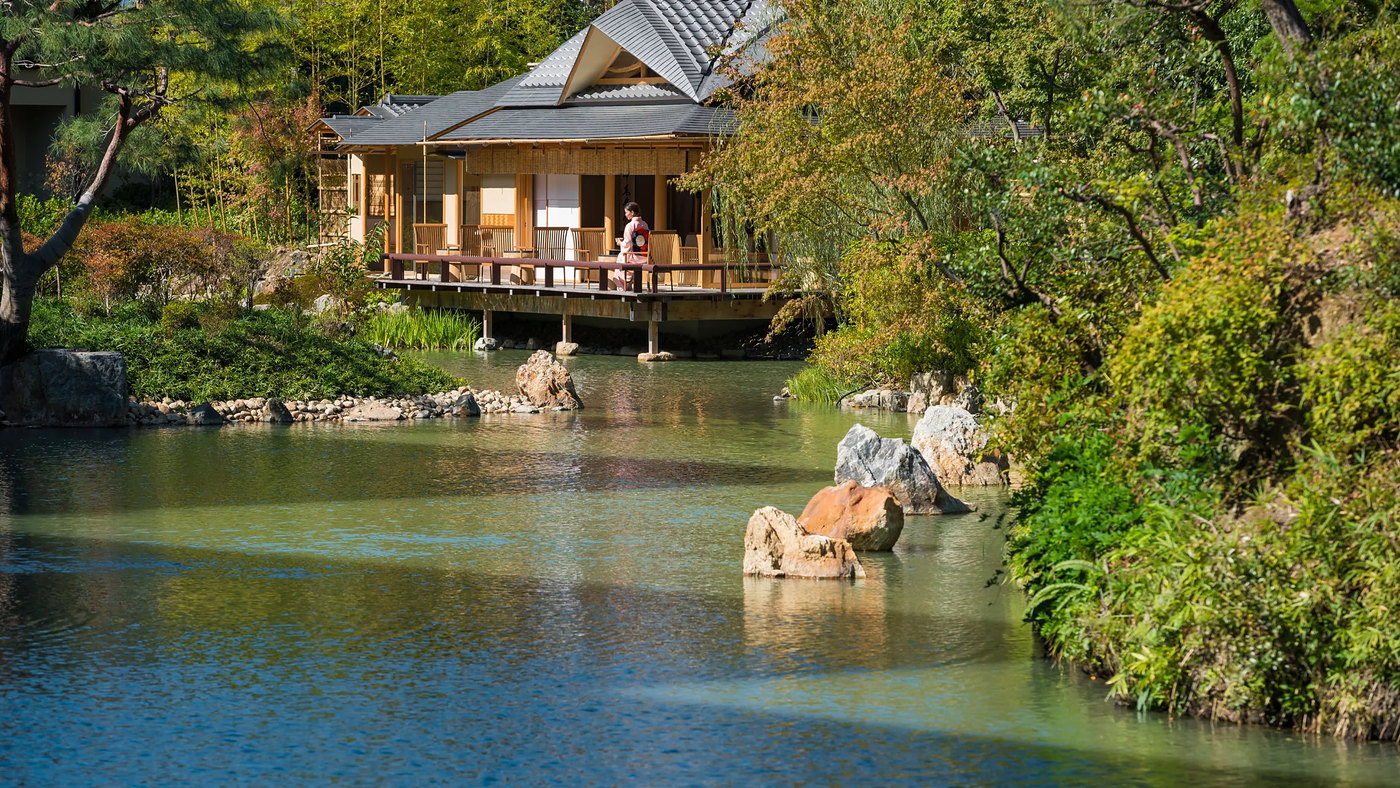
The garden is older than the hotel by roughly eight hundred years, and part of what is known about it comes from a poem.
Shakusui-en is a pond garden from the end of the Heian period, one of very few still surviving, and it is believed to have belonged to Taira no Shigemori, who died in 1179. The attribution rests on two things: the design itself, which belongs unmistakably to its century, and the description of the place in the Tale of the Heike. It was renovated once in the Genroku era and restored again in our own, when the waterfall was rebuilt from its original stones following a survey made in the 1930s. Two ponds, Oike and Koike, are divided by a stone bridge. There are two islands. A camphor on the bank is two hundred years old.
The hotel opened around it in October 2016, 110 rooms and thirteen suites over five low floors by Kume Sekkei, and the whole plan is subordinate to the water. That is the argument for it. Kyoto has older hotels and more decorated ones, but nothing else in the city lets you take breakfast beside a garden a twelfth-century courtier is thought to have walked in.
Book Sushi Ginza Onodera when you book the room, because the counter seats ten. The tea house is a sukiya-style pair of rooms, Fuju and Shakusui-tei, designed by the Kyoto architect Ryosuke Yamamoto, and it can be reserved privately. Walk the pond circuit at six in the morning before anyone is up, when the carp come to the bridge.
Affiliation · Four Seasons Preferred Partner
Three
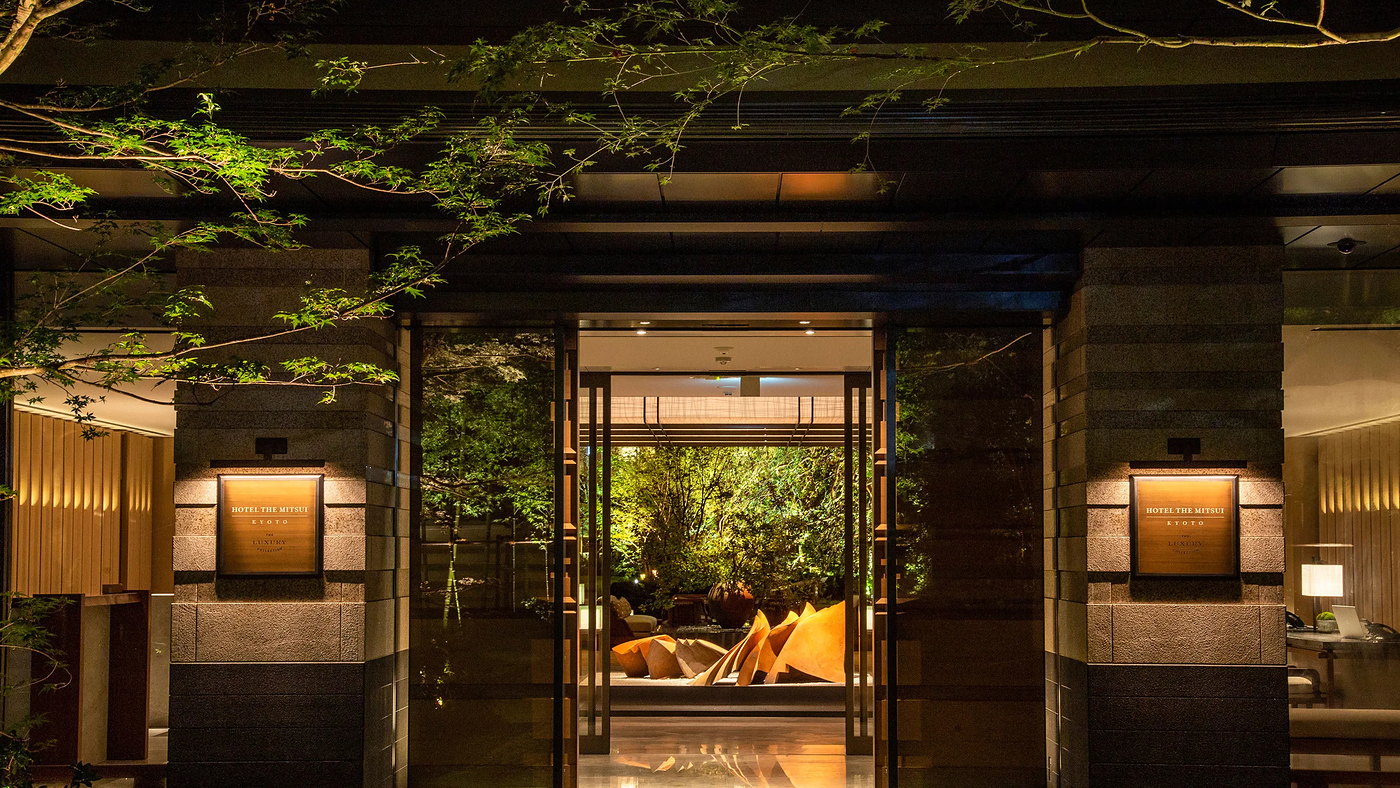
The gate was built in 1703 for a palace inside the Imperial grounds. In 1935 the Mitsui family took it down and re-erected it at their own residence, where it stood for another eighty-five years on land the family had held for more than two and a half centuries. It is now the front door, restored by Kyoto craftsmen, and since July 2021 it has been a registered Tangible Cultural Property in its own right. You walk through three hundred and twenty years of history to check in, and Nijo Castle is across the road.
Inside, André Fu worked in cedar, washi and a grey-green palette lifted from the courtyard garden, which Shunsaku Miyagi laid out in two halves, one modern and one traditional, joined by water. There are 161 rooms, two of them Onsen Suites with private gardens and outdoor baths lined in local cherry wood. It opened in November 2020.
The water comes from directly beneath the building. The hotel drilled its own well to around a thousand metres and named the spring Kyoto Nijo Onsen, which makes this the only hotel in central Kyoto bathing its guests in water drawn from its own ground rather than delivered from the mountains. The Thermal Spring Spa runs to a thousand square metres, and the communal thermal room is swimsuit-wearing and mixed, which is unusual here and means couples can use it together.
It holds three Michelin Keys, one of only seven hotels in the whole of Japan to do so, and it entered the World's 50 Best Hotels at forty-six. Eat at TOKI, at the birch counter, and ask for the teppan seats rather than a table.
Affiliation · Marriott STARS
Two
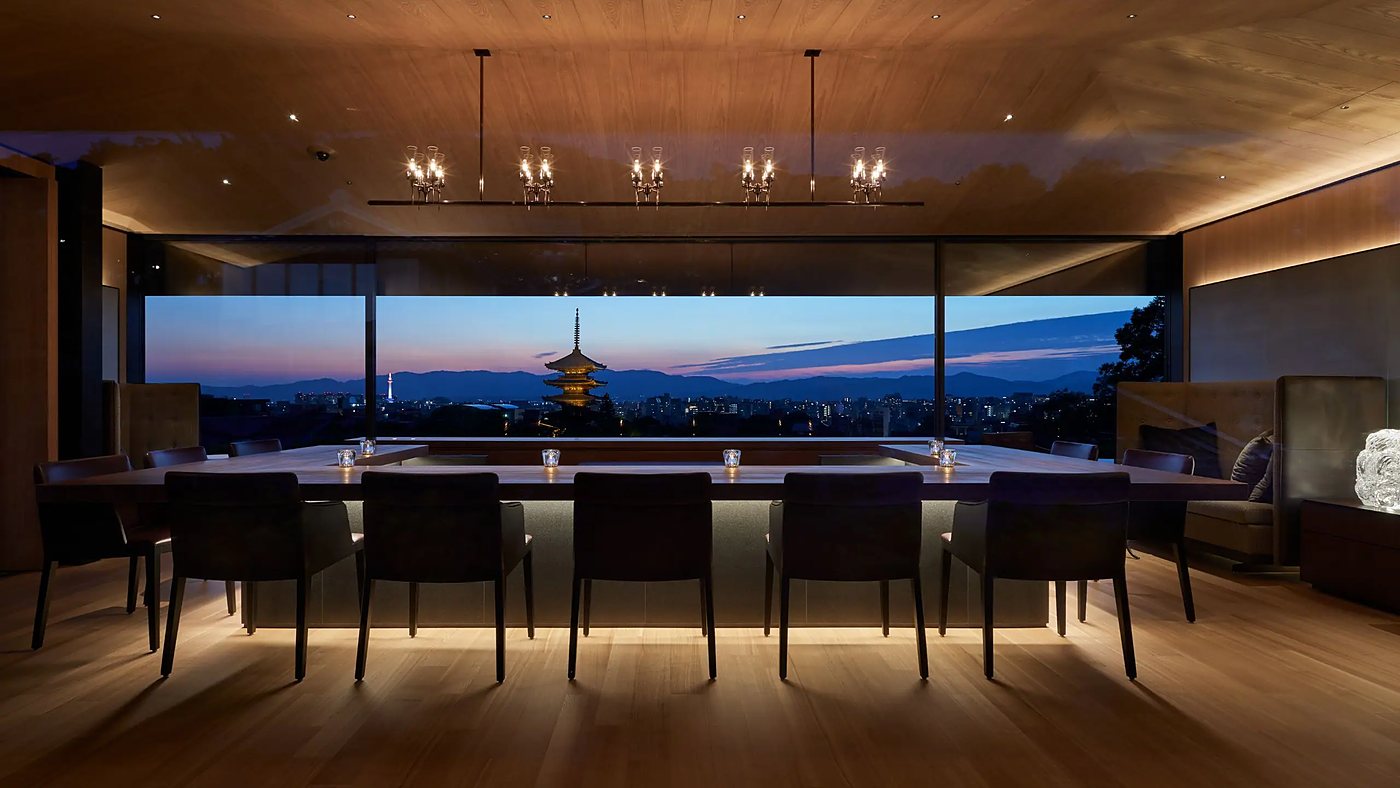
We have made the long case for this one already, at ninth in our ten best hotels in the world. On a Japanese list the argument compresses to a single sentence: Kyoto restricts height, rooflines and materials in Higashiyama and has done for decades, so the number of hotels that can put you inside the historic quarter is very small and will never grow.
Seventy rooms, nine of them suites, on the slope below Kōdai-ji. It placed fifty-ninth in the World's 50 Best Hotels in 2025, the highest of any hotel in Kyoto that year. What that ranking cannot convey is the ordinary morning: you step out onto Nene-no-michi and walk up to Kiyomizu-dera before the first coach arrives, rather than crossing the city from a tower by the station.
Affiliation · Hyatt Privé
One
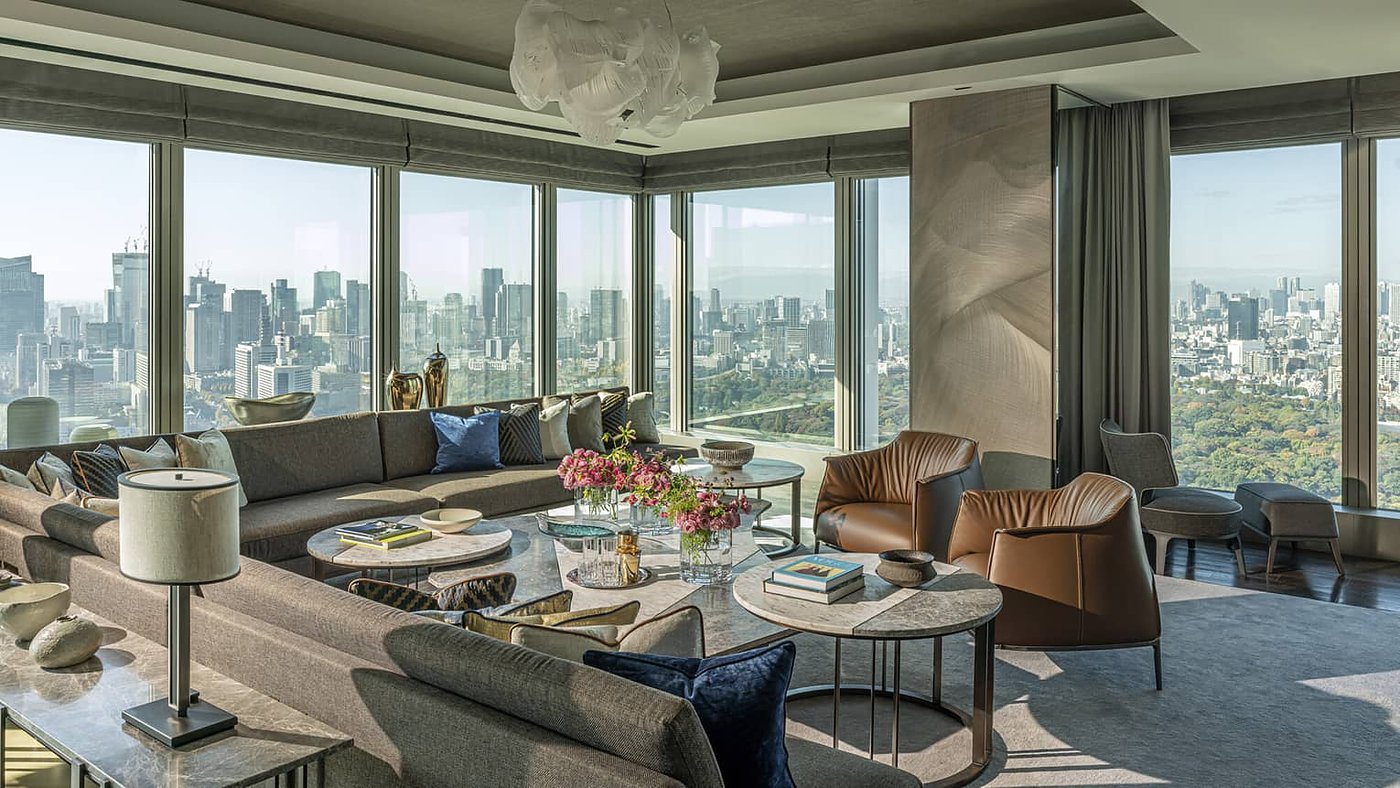
It stands sixth in our ten best hotels in the world, higher than any other hotel in Japan, so it can hardly stand anywhere but first here.
The reason is an address rather than a building. Otemachi is the financial district, where every tower looks into another tower, and this one looks instead at the Imperial Palace: a hundred and fifteen hectares of moat, pine and closed garden in the middle of the densest city on earth, protected by law from anything ever being built on it. On a clear winter morning Mount Fuji sits on the horizon behind it. The hotel occupies the top floors of a thirty-nine-storey tower by Skidmore, Owings and Merrill, with 170 rooms and twenty suites and interiors by Jean-Michel Gathy, and it is built directly above Otemachi station, so you reach the subway without going outdoors. In a country where the best hotels are usually the ones with the oldest thing on the property, this is the exception that wins on the newest.
Affiliation · Four Seasons Preferred Partner
Japan is the one country where the oldest thing on the property is usually the reason to go.
Rendezvous Travel Collection
On our list, Four Seasons Tokyo at Otemachi, which also stands sixth in our ten best hotels in the world. For Kyoto specifically, Park Hyatt Kyoto and HOTEL THE MITSUI KYOTO are the two to weigh against each other.
Both, and in that order if you can. Kyoto rewards early mornings and short walks, so stay inside the historic quarter rather than near the station. Tokyo rewards height and position, so stay where the view is protected, which in practice means the Imperial Palace side.
Of the seven here, two. The Ritz-Carlton Nikko pipes natural sulphurous water from Nikko Yumoto Onsen, about ten kilometres up the valley. HOTEL THE MITSUI KYOTO drilled its own well to roughly a thousand metres beneath the building, which makes it the only hotel in central Kyoto with a hot spring of its own.
Yes, and on the same terms as anywhere else. Every hotel on this list sits inside one of our programmes, so the booking carries daily breakfast, a property credit where the programme includes one, upgrade priority and early or late check-in consideration, at the hotel's own rate.
Tell us what you have in mind, and we will arrange it with the standing of a preferred partner.