
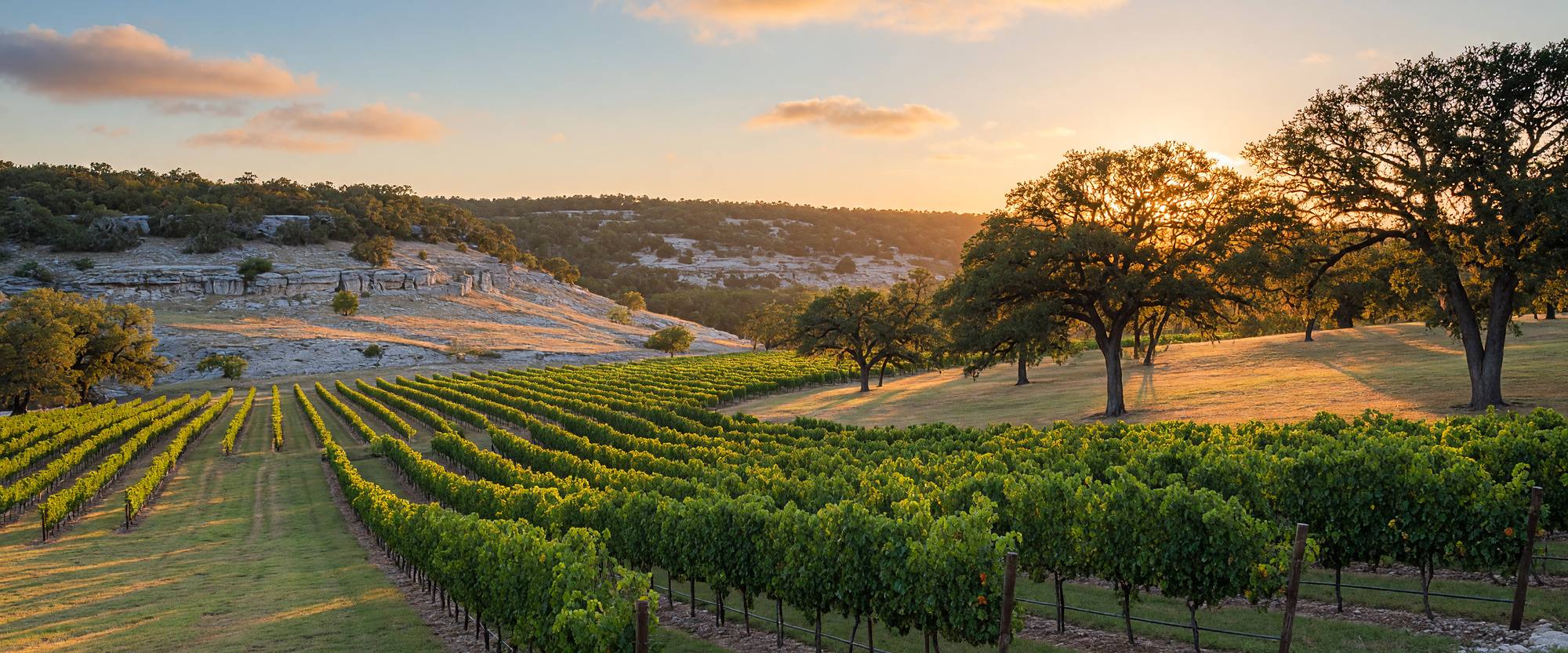
Texas Hill Country, and Fredericksburg specifically, is currently absorbing more ultra-luxury hospitality investment at once than almost any US region outside a handful of established markets. Waldorf Astoria, Aman, Auberge, Canyon Ranch and Kimpton all have major projects underway or announced in the same relatively small area, less than two hours from both Austin and San Antonio.
The Short Answer
Five major luxury hospitality brands, Waldorf Astoria, Aman, Auberge, Canyon Ranch and Kimpton, are building large-scale resorts around Fredericksburg, Texas, the most-visited wine destination in the US outside Napa Valley. The draw is an already-proven, high-demand market with almost no existing full-service luxury supply, and branded residences that make the economics work in a way a standalone hotel often can't.
The scale of what's actually being built
Waldorf Astoria Texas Hill Country, its first Texas property, is planned on 106 acres with 60 hotel rooms and suites, five dining concepts including one from Michelin-starred chef Dominique Crenn, an 11,000 square foot spa, and branded residences starting at 2.9 million dollars, 87 homes across villas and estate residences. Construction began in late 2025 with an opening targeted for 2027 to 2028. Aman announced Amansanu in April 2026, its sixth US property and first ranch-inspired resort, built as standalone pavilions roughly 90 minutes from Austin. Auberge Resorts Collection, alongside Canyon Ranch and Kimpton, round out a five-brand build-out that Forbes has described as transforming the region's character from small independent wineries into a much larger, brand-anchored destination.
Why here, and why now
Fredericksburg is already the most-visited wine destination in the United States outside Napa Valley, with more than 75 wineries in the immediate area and over 100 within reach of the new developments, drawing a large, established base of affluent regional visitors from Austin, San Antonio, Dallas and Houston. Until this wave, luxury accommodation in the area was almost entirely small, independent properties built around a single winery or ranch. What's arriving now is a different scale entirely: destination spas, multiple restaurant concepts, and branded residences spread across hundreds of acres, closer to how Napa itself developed than to the area's own recent past.
The residence component is not incidental. Standalone ultra-luxury hotels are difficult to finance at this scale on room revenue alone; pairing a hotel with branded residences, priced from the high six figures in comparable projects, gives developers the upfront capital that makes a 100-plus-acre resort financeable in the first place. That financing structure, more than the wine itself, is a large part of why five brands are moving into one small Texas town simultaneously rather than spreading out.
Our position
This isn't a single brand making a contrarian bet. It's five brands making the same read on the same market at nearly the same time, which is a much stronger signal than any one project alone. The honest risk, flagged directly by people involved in the developments themselves, is whether the area's actual character, small wineries, working ranches, a specific unhurried pace, survives the arrival of hundreds of new hotel rooms and branded homes at once. Worth watching over the next two to three years is whether Fredericksburg becomes a genuine new luxury destination in its own right or simply a wealthier, more polished version of what drew people there to begin with.